
Why Emerging Markets?
We believe emerging and frontier markets offer compelling long-term investment opportunities, driven by powerful structural trends: favorable demographics, ongoing deregulation, the continued rise of offshore outsourcing, and steadily improving corporate governance.
Why Emerging Markets and Frontier Markets Now?
In our view, the global economy is increasingly fragmenting into distinct spheres: the “old” economies on one side and the BRICS nations (and their expanding orbit) on the other. Sustained population growth, lower structural debt-to-GDP ratios, and the accelerating push toward de-dollarization—amplified by the weaponization of economic sanctions—point to a continued rise in the relative importance of BRICS economies. As fiduciaries, we must assess global opportunities through the lens of economic reality rather than ideological preference.
Key Takeaway
BRICS economies: younger demographics • lower structural debt • rising global influence
Contrary to the prevailing consensus, we believe emerging markets are well-positioned to perform constructively under the Trump administration. Historically, U.S. foreign policy has often been expressed through military assertiveness. We expect this administration to favor a more commercially oriented form of assertiveness. That shift, in our judgment, creates both new risks and meaningful opportunities across global markets.
Many market participants appear to be dismissing President Trump’s recent geopolitical remarks. We take them seriously. We believe the post-1990 era of unchallenged American hegemony has ended and that the world is returning to a system of spheres of influence.
Trump’s comments regarding the Panama Canal, Greenland, and even Canada strike us as a modern expression of the core American foreign-policy instinct—a contemporary Monroe Doctrine. Before the Second World War, the United States was generally reluctant to intervene abroad. That posture is captured in John Quincy Adams’ observation that “America does not go abroad in search of monsters to destroy,”(1) George Washington’s counsel to “steer clear of permanent alliances with any portion of the foreign world,”(2) and, most relevant to the current moment, Thomas Jefferson’s formulation:
“Peace, commerce, and honest friendship with all nations—entangling alliances with none.” — Thomas Jefferson, 1801.(3)
We anticipate a world increasingly organized around regional spheres of influence:
- Western Hemisphere → United States reasserts primary oversight (modern Monroe Doctrine)
- Europe → potential posture reset as a revitalized Russia secures its western frontiers
- East Asia → China continues to dominate its near seas (Yellow, East, and South China Seas)
- Indian Ocean region → rising Indian influence
The question is no longer whether the world is re-ordering — it is who is positioned for it.
This realignment will create clear winners and losers. Europe looks particularly exposed. Once-dominant industrial powers such as Germany are already living with the consequences of cutting themselves off from cheap, reliable energy and adopting adversarial stances toward natural trading partners, notably China and Russia. Traditional export markets have contracted.
BYD sold 4.6 million vehicles in 2025 — more than Ford — becoming the world’s sixth-largest automaker. Overseas shipments exceeded 1 million units and continue to surge in 2026.(4)
Navigating this shifting realpolitik landscape will require investment managers who can anticipate macro-level changes and translate them into portfolio positioning. Emerging-market managers have long operated in environments where understanding the interplay between macro shifts and micro-level outcomes is essential. That skill set is about to become even more valuable.
What this means for portfolios
Managers who can read the new map of spheres of influence — and act on it — will have a structural edge in the years ahead.
Citations
- John Quincy Adams, An Address… Celebrating the Anniversary of Independence, at the City of Washington on the Fourth of July 1821 (Washington, D.C., 1821).
- George Washington, Farewell Address, 19 September 1796.
- Thomas Jefferson, First Inaugural Address, 4 March 1801.
- “China’s BYD Overtakes Ford in Global Sales for the First Time,” Autoblog, 12 February 2026. https://www.autoblog.com/news/chinas-byd-overtakes-ford-in-global-sales-for-the-first-time”
Higher Gross Domestic Product growth rates may help drive profits and returns.
Demographic dividends can drive regional and domestic growth.
Emerging markets offer compelling diversification benefits for long-term investors.
Demographic Dividends May Drive Regional and Domestic Growth.
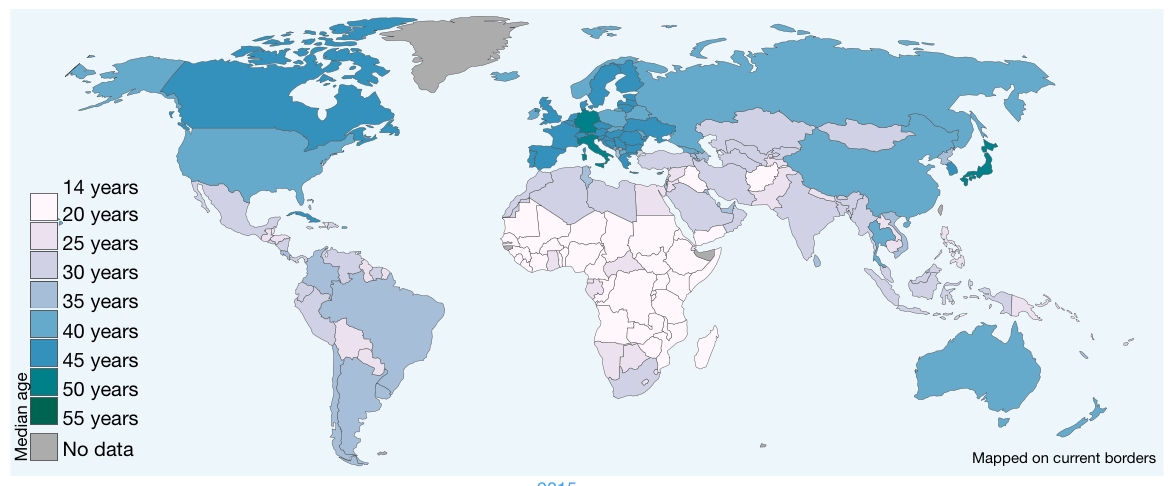
Median Age, 2015
Much of Africa, Asia, and Latin America have young and growing population.
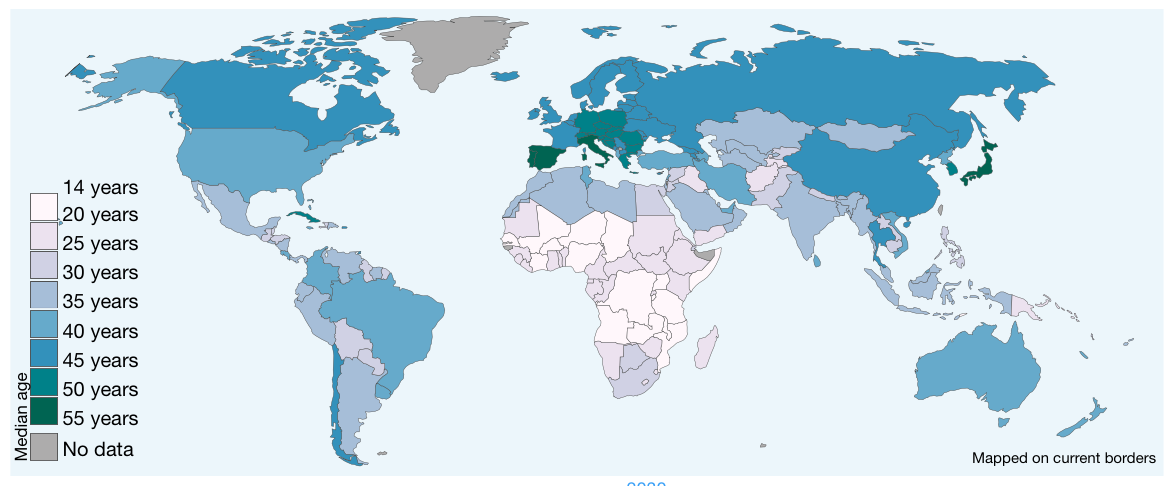
Median Age, 2030
Larger labor forces as a % of a country’s population can mean greater economic activity, consumption and GDP growth.
*Source UN Population Division (Median Age) 2015 Revision. Note: 1950 to 2015 show historical estimates. From 2020 the UN projections (medium variant) are shown. For Illustrative Purposes Only.
Higher Growth Rates May Help Drive Profits and Returns.
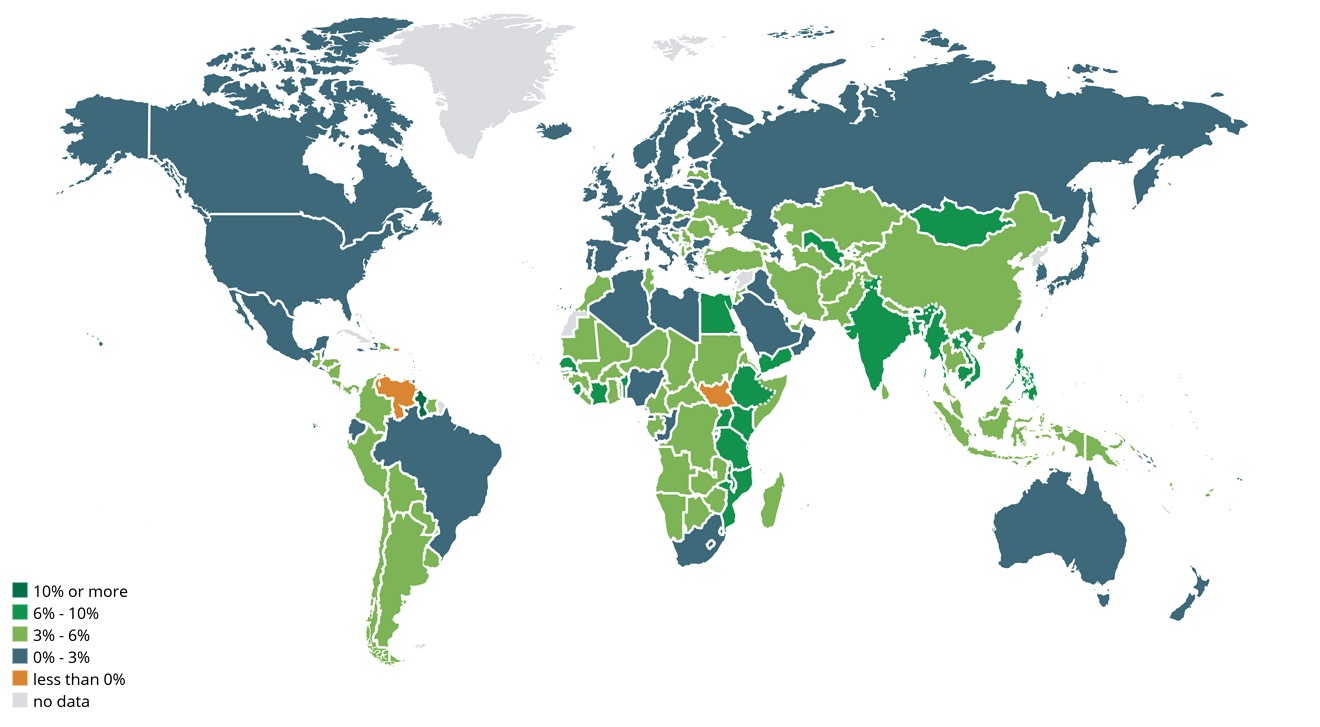
| REAL GDP GROWTH (Annual % Change)* |
2023 (Projected) |
|---|---|
| China | 5.5 |
| Vietnam | 6.5 |
| India | 8.2 |
| Indonesia | 5.6 |
| Pakistan | 5.0 |
| United States | 1.4 |
| Euro Area | 1.4 |
| Japan | 0.5 |
*Source ©IMF, 2018, World Economic Outlook (April 2018) For Illustrative Purposes Only.